
You can sit through a whole meal, drive across town, or spend an hour on the couch without much trouble. Then you stand up and start walking, and within a few minutes the aching starts. The moment you sit back down, it eases off. Then you try again, and the same thing happens.
This pattern is one of the more frustrating parts of living with undiagnosed spinal stenosis, partly because it doesn’t look like a typical back problem from the outside. Many people spend months attributing it to age, tight muscles, or being out of shape before anyone identifies what’s actually going on. Understanding what spinal stenosis is, why it behaves the way it does, and what pain management options exist before ever considering surgery is where that conversation starts.
What Does Spinal Stenosis Actually Feel Like?
The question doesn’t have one clean answer, which is part of why it gets misread so often. For some people, it starts as a dull ache or a burning sensation in the lower back that comes and goes. For others, the more noticeable symptoms show up in the legs: heaviness, cramping, or a weakness that sets in after walking a certain distance and fades once they sit down. Numbness or tingling that travels from the lower back into the buttocks, thighs, or calves is also common.
One of the more telling signs of lumbar spinal stenosis is the way symptoms shift depending on body position. Standing and walking tend to make things worse. Sitting, leaning forward, or flexing at the waist tends to bring relief. Some people notice they can push a shopping cart for longer than they can walk upright, or that hunching slightly forward buys them more distance before the pain sets in. When the spine extends under upright load, the spinal canal narrows slightly, which increases pressure on already-compressed nerves. Flexion opens that space back up.
Why Walking Makes Spinal Stenosis Pain Worse
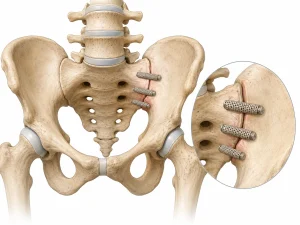
Walking isn’t hurting your spine, but it is changing how your spine handles load. The spinal canal is the channel that runs through your vertebrae and houses the spinal cord and the nerve roots that branch off from it. In a spine affected by stenosis, that space has been reduced by bone spurs, thickened ligaments, or degenerative disc changes.
When you walk, your lumbar spine moves into extension, which compresses the canal further. That pressure on the nerve roots is what produces the aching, cramping, and leg heaviness. The longer you stay upright, the more sustained that compression becomes, which is why symptoms tend to build gradually rather than hitting all at once.The clinical name for this pattern is neurogenic claudication: leg pain, weakness, or heaviness that comes on with walking and eases with sitting or flexion.
What makes this particularly tricky is that the narrowing itself isn’t always what’s causing the worst symptoms. Someone can have a measurably compressed canal and function reasonably well at rest. The problem surfaces when load and movement enter the picture. At rest, the spine is in a relatively neutral position, and whatever space remains in the canal is distributed evenly around the nerve roots. The moment you stand up and start moving, that balance shifts.
When you bend forward, the lumbar spine flexes and opens up space in the posterior spinal canal. Pushing a cart, leaning over a counter, or riding a stationary bike all produce that same flexion effect. If you’ve already figured this out through trial and error, you’ve been self-applying the logic that guides physical and aquatic therapy programs for this condition.
Can Spinal Stenosis Be Treated Without Surgery?
Most spinal stenosis is not managed surgically, at least not at the outset, and in many cases not at all. Non-surgical spinal stenosis treatment has a meaningful track record, and surgery tends to enter the conversation only when other approaches have been exhausted or when specific neurological changes make it necessary.
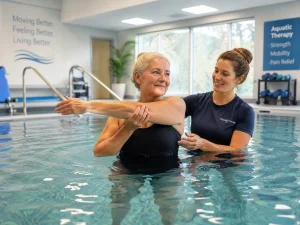
The starting point is almost always conservative care: some combination of physical therapy, activity modification, and medication. Flexion-based physical therapy in particular can decompress the spine, strengthen supporting muscles, and reduce how often symptoms flare. Aquatic therapy offers a useful environment for patients who find land-based exercise difficult, since the buoyancy of water offloads spinal pressure while still allowing for meaningful strengthening work.
When conservative measures aren’t enough, epidural steroid injections and nerve blocks are among the most commonly used next steps. Epidural injections deliver anti-inflammatory medication directly around the compressed nerve roots. Nerve blocks target specific pain pathways and can help clarify the source of a patient’s symptoms as much as treat them. For patients who haven’t responded adequately to those options, spinal cord stimulation is another avenue worth understanding, where a device delivers mild electrical pulses to the spinal cord that interfere with how pain signals reach the brain.
What Is the Best Pain Management for Spinal Stenosis?
It depends, and any practice that tells you otherwise before knowing anything about your history is skipping the part that matters most. Someone 6 weeks into noticing leg heaviness on walks is in a very different position than someone who has been managing this for 2 years and is still losing ground. Both are valid starting points, but neither calls for the same approach.
Dr. Richard Epter founded Augusta Pain Center in 2001 with a structure built around that kind of individualized care. As the only interventional pain physician in the region with five pain board certifications and a board certification in anesthesiology, he brings a depth of diagnostic and procedural expertise that informs how treatment plans get built. Patients at Augusta Pain Center also have access to behavioral health support through Dr. Schiff, the practice’s pain psychologist, whose work on the cognitive and emotional dimensions of chronic pain has a documented impact on how well treatment takes hold. That integration isn’t a bonus add-on. For a condition that affects activity patterns, sleep, mood, and overall function the way spinal stenosis does, it’s part of how good outcomes actually happen.
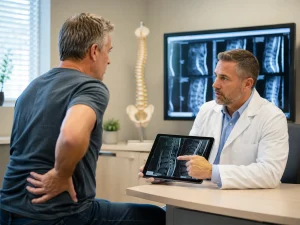
If any of this sounds like what you’ve been navigating, the right next step isn’t a surgery consultation. It’s a conversation with a specialist who can assess what’s actually going on. If you’re new to the practice, the new patients page is a good place to start. When you’re ready, requesting an appointment takes a few minutes, and the conversation from there is on your timeline.