Nearly 65 million people surveyed reported that they’d had a recent episode of back pain. 8% of those people reported experiencing chronic back pain. For many, that pain interferes with work, sleep, family activities, and overall quality of life.
Back pain is also a leading reason Americans miss work and one of the most common causes of disability. When your back hurts, everything feels harder.
While some people need medical procedures or prescription medications as part of their pain management plan, there are also simple things you can do at home to support your spine. One of the easiest and most effective strategies is to add gentle stretches for back pain into your daily routine. Over time, these stretches can help you find back pain relief, improve flexibility, and decrease stiffness.
At Augusta Pain Center, we talk with patients every day about practical, functional pain management strategies they can use between visits. Daily stretching is often one of the first recommendations.
How Stretching Helps With Back Pain
When you sit, stand, or move in the same way for long periods of time, the muscles that support your spine can become tight and fatigued. This tightness may pull on the spine, compress nearby joints, and make everyday movements feel uncomfortable.
Gentle stretches for back pain can help by increasing blood flow to the muscles that support your spine and releasing tension in the hips, lower back, and shoulders. Regular stretching also improves posture and alignment over time, which can reduce strain on your spine. In addition, stretching can decrease stiffness after long periods of sitting or standing, making it easier and more comfortable to move.
Unlike high-intensity workouts, stretching does not require special clothing or equipment. You can do most of these movements on a mat, rug, or even your bed. The key is consistency and listening carefully to your body.
What Are Ways I Can Reduce My Back Pain Through Stretching?
If you are just starting a stretching routine for back pain, it is helpful to keep it simple. Aim for a short series of movements you can realistically perform most days, rather than a long list you will struggle to maintain.
Start slowly and move gently into each stretch, stopping if you feel sharp or shooting pain. You should feel a comfortable pull rather than intense discomfort. As you stretch, breathe steadily, inhaling through your nose and exhaling through your mouth. This helps your muscles relax and makes each stretch more effective. Focus on holding each position rather than bouncing in and out of it, since holding a stretch allows your muscles to lengthen more safely.
Consistency is important. Daily or near-daily practice typically leads to better back pain relief than stretching only once in a while. You will get the most benefit if you combine stretching with other healthy habits, such as maintaining good posture, taking regular movement breaks during the day, incorporating strengthening exercises, and supporting a healthy weight.
If you have a known spine condition, a recent injury, or a history of back surgery, talk with a pain management specialist or your primary healthcare provider before starting a new stretching routine.
The Best Daily Stretches for Back Pain Relief
Below are gentle, beginner-friendly stretches for back pain you can try in the morning and before bed. If any movement feels wrong for your body, skip it and speak with a clinician who can suggest alternatives.
1. Cat-Cow Stretch
The cat–cow stretch warms up your spine by moving it through flexion and extension. This simple, flowing motion can ease stiffness in the back and prepare you for deeper stretches.
To perform this stretch, begin on your hands and knees with your hands aligned under your shoulders and your knees under your hips. As you inhale, move into a cow pose by allowing your belly to gently drop toward the floor, lifting your chest, and tilting your tailbone upward so your spine forms a soft “U” shape. As you exhale, move into cat pose by pressing the ground away, rounding your spine toward the ceiling, and tucking your chin slightly, like a stretching cat. Continue flowing between cat and cow for ten to fifteen slow breaths, coordinating each movement with your inhale and exhale. This stretch helps mobilize the entire spine and is an excellent way to begin a stretching session.
2. Wide-Legged Child’s Pose
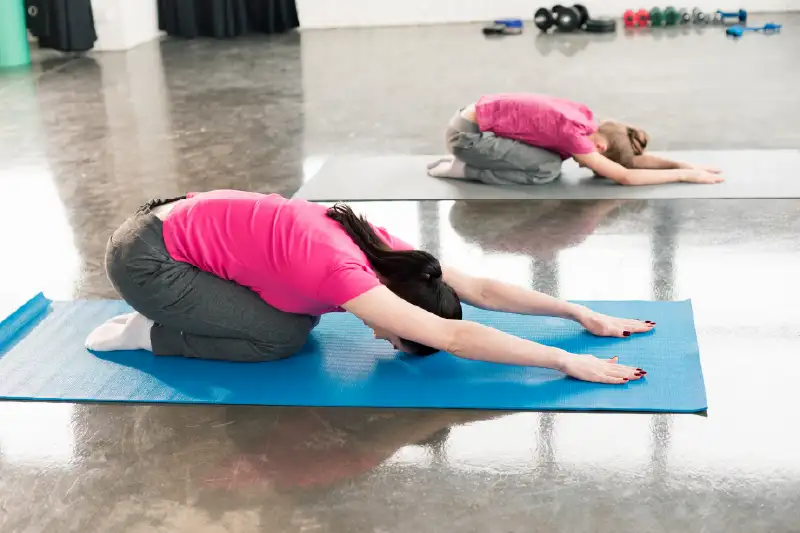
Wide-legged child’s pose is a gentle forward fold that lengthens the muscles along your back while also opening your hips. It is a restorative position that many people find calming and supportive.
From hands and knees, bring your big toes together and gently widen your knees apart. Sit your hips back toward your heels and lower your chest and forehead toward the floor, reaching your torso into the space between your knees. To stretch your back and shoulders, reach your arms forward and press your fingertips into the ground so you feel your armpits sink gently toward the floor. If you prefer to focus only on your back, you can instead allow your arms to rest by your sides with your palms facing up. Stay in this position for fifteen to thirty slow breaths, relaxing a little more with each exhale. This stretch is especially helpful after a long day of sitting or standing.
3. Side Stretch in Child’s Pose
You can build on a child’s pose to gently stretch the sides of your body, including the ribcage, obliques, and parts of your core. This can help relieve tightness that contributes to mid-back and lower back pain.
From a wide-legged child’s pose with your arms extended in front of you, slowly walk both hands over to the right while keeping your hips grounded toward your heels. As you reach to the right, you will create a gentle “C” curve along the left side of your body, and you should feel a stretch along the left side of your ribs, waist, and back. Hold this position for fifteen to thirty breaths, breathing deeply into the left side of your ribcage.
When you are ready, walk your hands back to center and then slowly walk them over to the left. This time, you will feel the stretch along the right side of your body. Again, hold for fifteen to thirty breaths before returning your hands to center. This variation offers an easy way to target muscles that are often overlooked but play a big role in spinal support.
4. Figure Four Stretch
Tight hips are a common source of lower back pain. The figure four stretch helps release tension in the glutes, outer hips, and hip flexors, which can indirectly provide back pain relief.
To begin, lie on your back with your knees bent and your feet flat on the floor. Lift your right foot and cross your right ankle over your left knee so your legs form the shape of the number “4.” If you already feel a stretch in your right hip and glute, you can stay in this position. If you need a deeper stretch, lift your left foot off the floor and gently draw your left knee toward your chest, threading your hands behind your left thigh or over your left shin. Keep your head and shoulders relaxed on the ground and avoid pulling so hard that you feel sharp pain. Hold this position for fifteen to thirty breaths and then gently release.
Repeat the stretch on the other side by crossing your left ankle over your right knee and following the same steps. This stretch is especially helpful if you sit for many hours a day or notice tightness in your hips when you stand up.
5. Reclined Spinal Twist
A reclined spinal twist helps relieve tension from holding the same posture for long periods. It can stretch the middle back, lower back, hips, and glutes while encouraging relaxation.
Lie on your back and hug both knees into your chest, gently rocking side to side to massage your lower back. Extend your arms out to the sides in a “T” position with your palms facing up. Keeping both shoulders on the floor, let your knees slowly drop to the right. If it feels comfortable, you can turn your head to the left for a deeper spinal twist. Breathe deeply and hold the stretch for fifteen to thirty breaths, softening into the twist as you exhale.
Bring your knees back to center, hug them into your chest again, and gently rock side to side. Then let your knees drop to the left, perhaps turning your head to the right, and hold for another fifteen to thirty breaths. Move out of the twist slowly to avoid straining your back.
Back Stretching Tips to Stay Safe
Stretching is generally safe for most people, but it is important to protect your spine, especially if you already have chronic back pain.
Stop immediately if you feel sharp, stabbing, or radiating pain while stretching, and avoid forcing your body into positions that feel wrong or unsafe. Move slowly when entering and exiting each stretch so you do not jerk or twist your back. If needed, use pillows, folded blankets, or blocks for support so you can maintain comfortable positions without straining. Pay attention to how your body responds over time, and talk with a healthcare provider if your pain is new, worsening, or accompanied by symptoms such as numbness, weakness, or changes in bowel or bladder control. Stretching should feel like gentle, controlled effort, not a test of pain tolerance.
When Stretching Isn’t Enough: When to See a Pain Specialist
While daily stretches for back pain can make a meaningful difference, they are not always enough on their own. You should consider seeing a pain management specialist if your back pain lasts longer than a few weeks or begins to interfere with your ability to work, sleep, or perform everyday activities. You should also seek professional help if you notice leg weakness, tingling, or numbness, or if you have a history of spine problems, trauma, or previous back surgery.
If over-the-counter medications and home care are not providing relief, a comprehensive pain management plan may be needed. This plan may include imaging to better understand the source of your pain, targeted injections, physical and aquatic therapy, medications, and other treatments in addition to stretching. The goal is not just to mask symptoms, but to improve function and overall quality of life.
Getting Started with Personalized Back Pain Relief at Augusta Pain Center
If you are ready to take the next step beyond at-home stretches for back pain, the team at Augusta Pain Center is here to help. Our specialists evaluate the underlying causes of your back pain and design a customized treatment plan that fits your daily life, work demands, and health goals.
We can help you understand what is driving your back pain, learn safe stretching and movement strategies tailored to your condition, and explore advanced options for back pain relief, including minimally invasive spinal procedures and other comprehensive pain management services.
You do not have to manage chronic back pain alone. To learn more about treatment options or to request an appointment with Augusta Pain Center, contact our team today and take the first step toward feeling better and moving more comfortably again.