If a healthcare provider uses the terms sciatica or lumbar radiculopathy, you may wonder whether they refer to the same condition.
Sciatica is commonly used to describe pain that travels from the lower back or buttock into the leg, usually along the path of the sciatic nerve. Lumbar radiculopathy refers to symptoms caused by irritation, inflammation or compression of a nerve root in the lower spine.
The two can overlap, and lumbar radiculopathy can cause a sciatica type pattern of leg pain. However, not all leg pain that looks like sciatica comes from a lumbar nerve root. Other conditions affecting the lower back, hip, nerves or surrounding tissues can cause similar symptoms.
Knowing the difference matters because finding the actual source of your leg pain can help a pain specialist near you choose treatment that fits the problem.
At Augusta Pain Center in Augusta, Georgia, Dr. Richard Epter and the interventional pain team look beyond where you feel pain. They assess where it begins, where it travels, what makes it worse and whether you also experience numbness, tingling or weakness.
What is Sciatica?
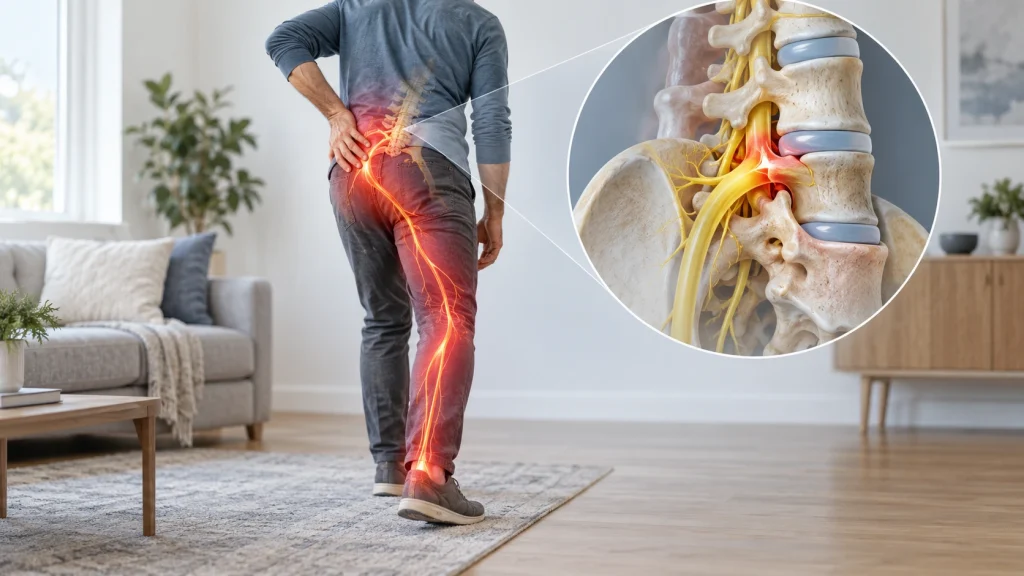
Sciatica is pain that follows the path of the sciatic nerve, often travelling from the lower back or buttock down into the leg. It describes what you feel and where the pain travels. It does not necessarily explain what is causing it.
The sciatic nerve is a large nerve pathway that begins with nerve roots in the lower spine and continues through the buttocks and into the legs. When one of the nerve roots contributing to this pathway becomes irritated, pain can travel into the leg.
Sciatica describes a pattern of pain rather than a specific diagnosis or structure causing the pain. The underlying cause may involve a herniated disc, narrowing around a nerve or another problem affecting the lower back or nearby nerves.
Identifying the likely source of the symptoms can help guide treatment. For example, pain caused by a herniated disc may be managed differently from symptoms caused by narrowing around a nerve. A pain specialist can use your symptoms, examination findings and imaging when appropriate to help determine what may be contributing to the pain.
For example, two people may both say they have sciatica. One may have a herniated disc irritating a nerve root. Another may have narrowing around a nerve caused by changes in the spine. Their symptoms may overlap, but the underlying problem and treatment options may differ.
What Does Sciatica Feel Like?
Sciatica often affects one side of the body, although symptoms can vary. In some cases, leg pain is more noticeable than lower back pain. Pain may begin in the lower back, hip or buttock and travel down the back or side of the thigh. It can continue into the calf, ankle, foot or toes.
Where pain travels can offer clues about which nerve may be involved. For example, pain or numbness along the outer leg and top of the foot may follow a different pattern from symptoms that travel down the back of the calf and into the sole of the foot.
A pain specialist will consider this pattern alongside changes in muscle strength, sensation, reflexes and movement. These findings can help guide the assessment, but pain location alone cannot confirm which nerve root is affected.
What is Lumbar Radiculopathy?
Lumbar radiculopathy occurs when a nerve root in the lower spine becomes irritated, inflamed, compressed or injured.
A nerve root is the short portion of nerve that exits the spinal column before contributing to nerves that travel into the hip, buttock, leg and foot. When that nerve root is affected, symptoms may show up anywhere along the area of the leg served by that nerve.
Sciatica describes a pattern of pain. Lumbar radiculopathy describes a problem affecting a nerve root in the lower spine. The two can occur together, but they are not always the same.
To determine whether lumbar radiculopathy is present, a pain specialist compares how your pain travels with physical examination findings, including changes in sensation, muscle strength and reflexes. Imaging or nerve testing may also be considered when needed to look for a possible cause, such as a disc problem or narrowing around a nerve.
This assessment can help determine whether your symptoms are consistent with lumbar nerve root involvement and whether a specific disc problem, joint or area of spinal narrowing may be contributing to your pain. Looking at these findings together can help your pain specialist identify the most likely source and guide the next steps in treatment.
Common Causes of Lumbar Radiculopathy
Several conditions can affect nerve roots in the lower back, including:
- Herniated or bulging discs that press on or irritate a nerve root
- Spinal stenosis, which is narrowing in the spaces where nerves travel
- Bone spurs and arthritis related spinal changes
- Degenerative disc changes
- Injuries or other structural problems affecting the spine
A herniated disc, for example, may irritate a nerve root and cause pain that travels down the leg. Spinal narrowing may also put pressure on a nerve and contribute to pain, numbness, tingling or weakness.
Lumbar radiculopathy can affect sensation, strength and reflexes, depending on the nerve root involved.
It is also important to remember that an MRI finding does not automatically explain your symptoms. Some people have disc changes or age related changes on imaging without pain. Your pain specialist considers the imaging alongside your symptoms and physical examination to determine whether a finding is likely to be the source of your pain.
Symptoms Associated With Sciatica and Lumbar Radiculopathy
People with sciatica may experience:
- Burning, shooting or electric-shock like pain
- Sharp pain that suddenly travels down the leg
- Tingling or pins and needles
- Numbness in the leg, foot or toes
- A heavy or weak feeling in the leg or foot
- Pain that worsens with sitting, bending, coughing or sneezing
Symptoms can look different from person to person. You might feel sharp pain in your buttock when sitting at a desk, or a burning sensation that travels down your leg when walking.
Sciatica and lumbar radiculopathy often overlap, but they describe slightly different things. Sciatica refers to a pain pattern that travels from the lower back or buttock into the leg, usually along the path of the sciatic nerve. Lumbar radiculopathy refers to irritation or dysfunction involving a nerve root in the lower spine.
An irritated lumbar nerve root is a common cause of sciatica type pain, but it is not the only possibility. Similar symptoms can also come from other nerves, joints, muscles or conditions affecting the hip and lower back. This is why a pain specialist considers the full symptom pattern rather than relying on the location of leg pain alone.
How Do Spine Specialists Tell Sciatica and Lumbar Radiculopathy Apart?
Sciatica describes pain that travels from the lower back or buttock into the leg. Lumbar radiculopathy refers to irritation, inflammation, compression or injury affecting a nerve root in the lower spine. The two can overlap, but they do not always have the same underlying cause.
To determine whether a lumbar nerve root is involved, a pain specialist reviews your symptoms, medical history and physical examination. Imaging or nerve studies may be used when they can help clarify what is causing the symptoms.
The goal is to identify where the symptoms are coming from. Pain that travels into the buttock and leg can suggest nerve involvement, but the pattern of numbness, changes in muscle strength or reflexes, and imaging findings can provide further clues about which nerve root may be affected and why.
The Physical Exam
During an evaluation, your pain specialist may check:
- Muscle strength in your hips, legs, ankles and feet
- Reflexes at the knee and ankle
- Sensation in different areas of the leg and foot
- Walking, balance and your ability to walk on your heels or toes
- Movements that reproduce your pain
- Nerve tension tests, such as the straight leg raise
Taken together, these findings may suggest involvement of a particular **lumbar nerve root**. For example, weakness when moving the foot in a certain direction combined with numbness in a corresponding area of the leg may support suspicion of a specific level in the lower spine.
A pain specialist considers these findings alongside your medical history, symptom pattern and physical examination. When needed, imaging can provide additional information about whether a disc problem or narrowing around the nerve may be contributing to your symptoms.
Imaging and Nerve Studies
If your symptoms and examination suggest a nerve root problem, additional testing may help confirm the diagnosis.
An MRI can show the discs, spinal canal, bone changes and spaces where nerve roots travel. It may identify a herniated disc, spinal narrowing or another structural change that could be affecting a nerve.
Electromyography, often called EMG, and nerve conduction studies may be useful when the diagnosis is uncertain or when symptoms do not clearly match MRI findings. These tests can provide more information about nerve function and possible nerve root involvement.
Not everyone with leg pain needs imaging or nerve testing. These tests are usually considered when the physical examination does not provide a clear answer, symptoms continue despite initial treatment, or the results could help confirm the cause and change the treatment plan.
Does Treatment Differ for Sciatica and Lumbar Radiculopathy?
Treatment for sciatica or lumbar radiculopathy depends on the likely cause of your symptoms, their severity and how much they affect your daily activities. A herniated disc, spinal stenosis or another cause of nerve root irritation may require a different approach to treatment.
Sciatica describes the pattern of symptoms, while lumbar radiculopathy can point to a problem affecting a specific nerve root. Once the likely source is clearer, a pain specialist can discuss treatment options that address the underlying cause while also helping manage pain, movement and daily function.
Conservative Treatment for Sciatica and Lumbar Radiculopathy
Many treatment plans begin with non-surgical care, which may include:
- Activity changes to reduce repeated irritation while avoiding unnecessary bed rest
- Physical therapy to improve movement, strength and daily function
- Medication management when appropriate
- Heat, ice and home exercises recommended by your care team
For example, if sitting for long periods aggravates your leg pain, your treatment plan may include changes to sitting habits, pacing strategies and exercises designed to improve movement tolerance.
If weakness or persistent pain is affecting your walking, a more targeted evaluation may be appropriate.
Interventional Pain Treatment for Sciatica and Lumbar Radiculopathy
When symptoms continue despite initial treatment, or when an evaluation identifies a specific irritated nerve root, interventional options may be considered.
Depending on the diagnosis, these may include:
- Epidural steroid injections
- Selective nerve root injections
- Other non-surgical interventional procedures
When your symptoms and examination findings point to a particular irritated nerve root, a targeted injection may be considered. Depending on the procedure, the injection may reduce inflammation around the nerve and may also help determine whether that area is contributing to your pain.
Epidural steroid injections are image guided procedures that may be used for some types of lower back and leg pain linked to nerve root irritation. They are not fit for everyone, and the amount and duration of relief can vary from person to person.
When Other Treatment Options Are Considered for Sciatica and Lumbar Radiculopathy
If pain continues despite conservative care and appropriate interventional treatment, your specialist may discuss additional options.
These may include minimally invasive procedures or surgery when clinically appropriate.
Pain travelling down the leg does not automatically mean surgery is necessary. Many people are first assessed for non surgical options, including rehabilitation, medication management and targeted procedures.
Surgery may be discussed when symptoms remain severe despite appropriate treatment, when imaging shows a structural problem that may require surgical care, or when neurological changes such as worsening weakness need further evaluation.
At Augusta Pain Center in Augusta, GA,, treatment options may include medication management, physical and aquatic therapy, non-surgical interventional procedures and minimally invasive surgical procedures when appropriate.
Getting a Precise Diagnosis for Your Leg Pain
Sciatica is a useful name for pain that travels from the lower back or buttock into the leg, but it does not always explain what is causing that pain. Lumbar radiculopathy may be the underlying issue when a nerve root in the lower spine is irritated, inflamed or compressed.
Determining whether a lumbar nerve root is involved requires more than looking at the name of your symptoms. A pain specialist considers where your pain, numbness or weakness occurs and compares that pattern with findings from the physical examination. Imaging and, when appropriate, nerve testing may provide additional information about which nerve root is affected and what may be causing the irritation.
When to Book an Appointment
Consider scheduling an appointment if your leg pain:
- Has lasted more than a few weeks
- Keeps returning after temporary relief
- Interferes with walking, sleep, work or everyday activities
- Comes with persistent numbness or tingling
- Includes weakness in your leg or foot
For example, if you have been managing pain down your leg for several weeks and it is now affecting your sleep, it may be worth finding out whether a specific nerve root is involved.
If leg pain, numbness or weakness persists, keeps returning or starts affecting your daily activities, an evaluation can help clarify what may be causing your symptoms. At Augusta Pain Center , you can request an appointment to discuss your symptoms, whether a lumbar nerve root may be involved and which treatment options may be appropriate for you.