
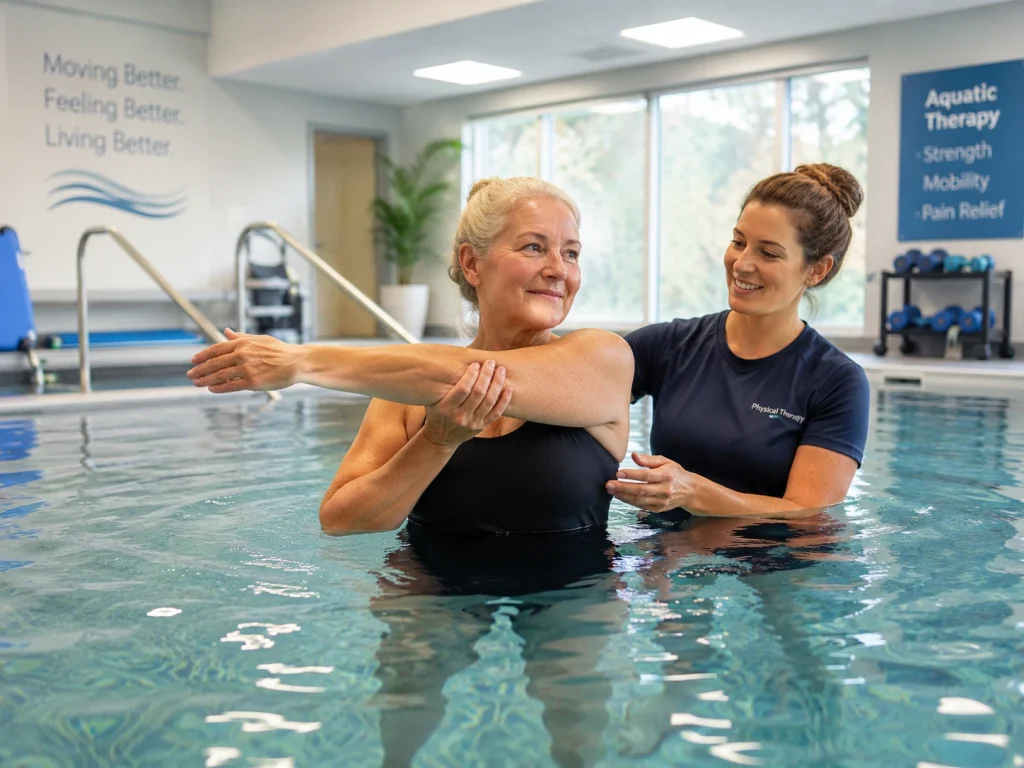
Aquatic physical therapy can relieve chronic pain that physical therapy couldn’t, because working in water takes the weight and impact off the joints that hurt. That difference matters most for people whose pain flares the moment they put weight on a sore hip, knee, or back, which is exactly where a standard exercise program tends to stall. If you completed one and came out no better, or hurting more, that is not a verdict on your effort. It usually means the setting was working against your condition. Augusta Pain Center offers aquatic therapy on-site as part of our physical therapy program, for the patients it genuinely fits.
Why Didn’t Physical Therapy Help My Chronic Pain?
Physical therapy often stalls when the exercises put weight on the exact joints and areas that already hurt, which for certain conditions makes the pain the barrier instead of the path forward. Most standing exercises send your full body weight down through the spine, hips, and knees. For a lot of people, that load is exactly what builds strength and eases pain over time. But if your condition is one where that weight is the problem in the first place, every session asks the sorest parts of your body to carry the very thing they cannot handle yet.
For some patients, physical therapy doesn’t just fail to help, it can even make the pain worse. If that happened to you, it is worth hearing clearly: that is usually a sign the approach was straining an area that wasn’t ready for it, not a sign you caused new damage by trying. Pain that climbs during or after a program is information, not failure.
None of this means physical therapy was the wrong idea or that you did anything wrong. It means the approach and the condition didn’t match. A stalled or painful physical therapy program is a mismatch to correct, not a dead end. And when weight and impact are the obstacle, the answer is often not a different set of land exercises but a different setting altogether.
What Is Aquatic Physical Therapy and How Does Water Help?
Aquatic physical therapy is guided rehabilitation done in a warm therapy pool, where the properties of the water take away the exact obstacles that made exercising on land too painful. It is the same goal as physical therapy, building strength and restoring movement, but the setting changes what your body has to deal with while it works.
Water helps for three main reasons:
- It holds you up. Standing in chest-high water supports a large share of your body weight, so a movement that would send your full weight down through a sore hip or knee on land only asks that joint to carry a fraction of it in the pool. On land, the weight is unavoidable. In water, it is mostly lifted off before you even begin.
- It stays warm. A heated pool relaxes muscles that have been tight and braced against pain, and it eases the stiffness that makes those first movements the hardest.
- The water pushes back. Every direction you move, the water gently resists, building strength without any pounding or impact. You get the resistance without punishing the joint.
Who Benefits From Aquatic Physical Therapy?
At Augusta Pain Center, the patients who benefit most from aquatic physical therapy tend to share one thing: for them, body weight and impact are the main things standing between effort and relief. Spinal stenosis is a clear example, since standing upright compresses the spine and worsens the pain, while the water lifts that pressure off. Chronic low back pain often responds for a similar reason. With hip and knee osteoarthritis, the worn joints are aggravated by every weight-bearing step, and water lets them move and strengthen without carrying full weight. Aquatic therapy also suits people still rebuilding after surgery, and many living with fibromyalgia or widespread pain, where the body tenses against movement and land exercise becomes too much to keep up with.
None of this makes aquatic therapy a replacement for physical therapy work. Many patients use water to build enough strength to then move on to, or return to, a land program. If you are trying to figure out whether that includes you, the most reliable answer comes from an evaluation with a provider who can look at your specific condition, not from a general list.
What Should I Expect During Aquatic Therapy?
What to expect during aquatic therapy is closer to a guided medical appointment than a swim. You will not start by doing laps. The process begins by looking at your condition, where and how you hurt, and what you are hoping to get back to, then builds a plan around you. Most of the work happens in waist- or chest-high water, warm enough to keep your muscles relaxed, and a typical session is a set of guided movements paced to what your body can handle that day. If the pain is higher than usual, the therapist scales the work back. For many people, aquatic therapy is a bridge: once the water has rebuilt enough strength and confidence, a good number of patients move on to a physical therapy program that would have been too much at the start.
You Do Not Need to Know How to Swim for Aquatic Therapy
The most common worry people bring is that they cannot swim, and it is worth settling plainly: you do not need to. The work is done standing in water shallow enough to keep your feet on the bottom and your head well above the surface, and a therapist is with you the entire time. If fear of the water has been the thing holding you back, this is not the deep end and you are not on your own in it.
Find Out Whether Aquatic Therapy Is Right for You
If physical therapy left you sore and discouraged, that is not the end of the road. It often just means your body needs a different setting to do the work. Aquatic therapy has helped many people who had all but given up on getting stronger, and the only way to know if it fits your situation is to have someone look at it directly. The team at Augusta Pain Center can evaluate whether aquatic therapy is right for you and build a plan around your condition. Call (706) 738-7246 or request an appointment to get started.